Your first class: just do it!
You will never really feel ready to try jiu jitsu for the first time. You may make internal "excuses," like you need to get in shape first or you're too old. The fact of the matter is that it can be scary to try something new, especially something physical like jiu jitsu.
Here is what to expect when you try a class at White Lotus: friendly faces who help you learn where you are physically and mentally. No pressure. We understand it's a different experience for everybody. Some people want to hop right in and some just want to dip their toes. Both ways can be right.
The biggest takeaway is to just try it once. Maybe you hate it… great, now you know it isn't for you. Maybe you love it… you just found a great way to protect yourself, stay in shape, and make a great group of new friends. Either way, you have more information to decide what you want.
We hope to see you on the mats soon.
What to wear to your first class
On your first day at White Lotus there is no "dress code." We want to make sure you like the sport before you start spending money on it. Wear a more form-fitting shirt and form-fitting shorts or spats, with as few zippers and pockets as possible. Fingers and toes can get caught in baggy clothing, and that can be a problem when grappling someone. Safety is always first.
Choosing your first gi
When you commit to training, you'll buy your first gi, the traditional uniform used in many martial arts. Many traditional schools require white gis, so it may be smart to make your first one white. That said, White Lotus is not a traditional school. Get whatever awesome colors fit your awesome personality.
What to buy. We suggest a lightweight gi. Heavier gis travel poorly and are hotter in summer. Brands like Elite make good starter gis for under $100. If you don't mind spending a bit more, Origin gis are made in America and they are awesome.
Under your gi. You'll want a rash guard and shorts. Gi fabric can be rough, and after a few rolls you might notice some chafing. A rash guard adds a layer of protection and makes training way more comfortable. It's also better for your training partners: nobody wants to grapple with a super sweaty, bare-chested teammate.
The belt. Your belt holds your gi closed and shows your rank. If you're new, White Lotus will give you your first white belt when you sign up. There are several ways to tie it, and YouTube does a good job explaining them.
No-gi grappling
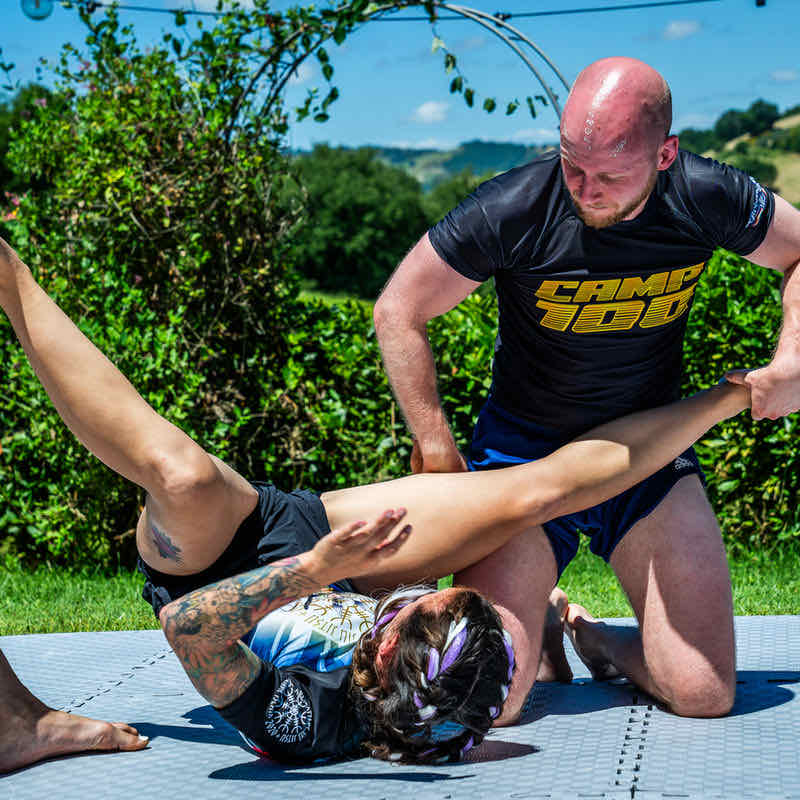
No-gi isn't the traditional way to practice Brazilian Jiu Jitsu, but over the last decade it has grown a lot in popularity. Without a gi, grappling takes more dynamic movement and relies on body control instead of grips on fabric. You wear form-fitting shorts and a rash guard, a sweat-wicking, tight-fitting shirt with sleeves that protects your skin and helps you move.
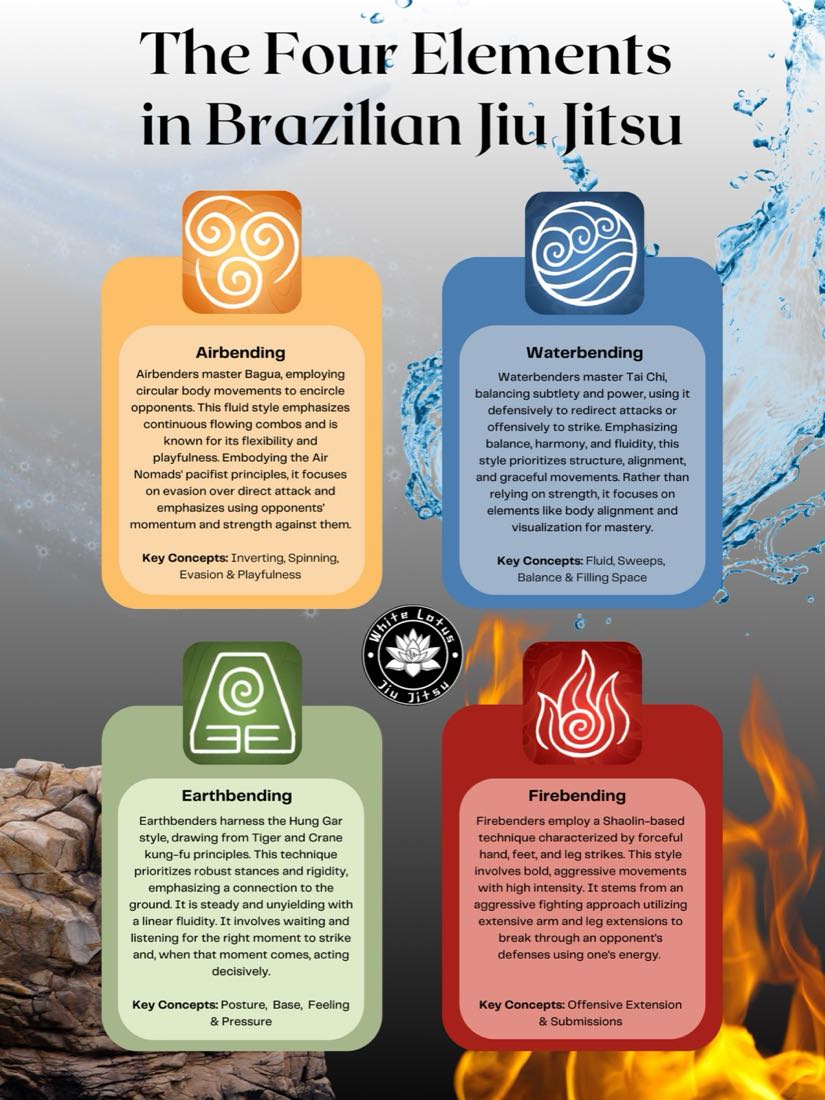
One of the best parts of rash guards is all the designs that let you show off your personality. White Lotus has a gym rash guard and an Avatar: The Last Airbender-inspired series for those who want to blend jiu jitsu with their fandom.
Ranked rash guards. Some gyms require rash guards whose sleeves match your belt rank. White Lotus doesn't, but it's good to know so you don't show up at an open mat where everyone assumes you're a brown belt.
Women's no-gi gear. Many brands now make rash guards and shorts cut specifically for women so they don't shift during rolls. At White Lotus, we encourage women to train in whatever makes them feel confident and comfortable, whether that's a standard rash guard and shorts or spats (leggings) for extra coverage.
Prioritizing cleanliness
Cleanliness of yourself and the gym is the highest priority. Jiu jitsu is inherently a gross sport. We're about as close as we can be to another human while they sweat profusely. There's no way around that, but we can make sure we don't smell and are as clean as we can be. As far as the gym goes, White Lotus has you covered. Here's what you can do so you aren't the smelly kid in class.
- Shower after every class you roll. Period. We don't currently have showers at the gym, so shower when you get home. The scariest part of the sport isn't armbars and strangles, it's staph infections. Staph often looks like an angry pimple that grows under the skin. If you see something like that, go to a doctor immediately. Other skin infections like ringworm are usually more annoying than dangerous.
- Keep your nails trimmed short to avoid accidental scratches. Once you've been caught by a toenail or a long nail, you'll understand why.
- Wash your training gear. Whatever you grapple in is one-time use. At White Lotus, you never grapple in a gi and wear it again the next day without washing it.
- Shoes off the mats, shoes on in the bathroom. Never walk on the mats in shoes. When you use the restroom, don't go in barefoot: use the sandals by the bathroom door. The last thing anyone wants is a barefoot person stepping in pee, then stepping on the mats. And of course, wash your hands!
Injuries and safety
Minor injuries. As with any physical activity, cuts, scrapes and bruises can happen. We have fully stocked first aid kits for minor wounds. If you bleed on the mat, stop rolling, clean yourself up, and tell the coach where you bled so we can wipe it up with bleach wipes.
Listen to your body. If you strain or sprain something, or hear something pop that isn't normal, stop rolling and talk to the coach. Don't be a tough guy at practice; you can make an injury worse. The coaches aren't doctors, but they can help you off the mat and share what they've seen over the years.
Serious injuries. If you break a little toe or a finger and it's still basically in line, that sucks, and tape is your new best friend. Something more serious very rarely happens, but if it does, know that you're among teammates and we'll make sure you get the care you need.
If someone goes out from a strangle. While very rare, it can happen. Put the person on their side and call the coach over immediately. They'll most likely be fine coming back from dreamland, but depriving your partner's brain of oxygen for long can be dangerous.
A culture of safety. Our approach is rooted in training that's Painless, Precise and Playful. Students train safely while still reaching their goals, and our room encourages self-awareness and respect for others.
BJJ FAQs for beginners
How do I explain jiu jitsu to my family? Jiu jitsu is like wrestling, except instead of pinning the person on their back, you try to submit them, which is like getting them to say uncle. Brazilian Jiu Jitsu's parent martial art is judo, and its cousin is wrestling.
Winning and losing on the mats. It's easy to think you're winning or losing a round. Maybe you got someone to tap, or you tapped. Don't fall into that trap. We're all on the same team, and teammates don't try to beat each other; they make each other better. Unless it's a competition class, don't try to win. Work on a skill and develop it, and let the other person try things on you so you learn to defend them.
How belts work at White Lotus. Belts are based on time on the mats and growth relative to your own skill. Everybody comes in with different athleticism and abilities, so we watch every student and award stripes or belts when they've shown improvement over time. A black belt at White Lotus takes 8–10 years of consistent training, 2–3 times a week. On the way there are four other belts: white, blue, purple and brown, and each belt gets four stripes before moving to the next color.
What to expect from your coaches and teammates. Your coaches are there to make sure you're safe, that you have a good environment to enjoy class, and that you learn some jiu jitsu. Your teammates are there to donate their bodies to the science of jiu jitsu. You need each other to get better, so always be grateful for your teammates.
How and when to tap. Tapping means you give up, and it's what allows us to train all the time. Without it, your partner wouldn't know when to stop. Jiu jitsu is a legit dangerous sport, so don't try to be a hero on a random Tuesday. If something hurts, you can't breathe, the lights are going out, or pressure is building while someone twists something of yours, just tap! It's wonderfully freeing. Tap by lightly slapping your partner with an open hand at least twice.
Finding time, soreness, feeling like you're struggling. Don't stress about any of this until you step onto the mat. Give jiu jitsu a shot first and see if you enjoy it. Then you can start thinking about managing your time and how your body is adjusting. The rest will come as you grow.
Managing risk. There's risk in jiu jitsu, as in life. Compare it to driving: with no seat belt, at high speed and with no experience, your risk of an accident is high. It's the same if you come to class redlining every roll without knowing what you're doing. Think of your arms and legs as rubber bands: they're much more likely to break under tension. Learn to roll with as little tension as possible. At White Lotus, we'll explain this in depth to keep you safe in the beginning.
Finding a gym culture that fits you. We're big believers in finding the gym culture that fits you. Just like any social group, you'll stick around if the people are your type of people. Some gyms are competition focused, MMA focused, hobbyist focused (like White Lotus), gi or no-gi focused, traditional, and so on. There's no right identity, just what's right for you at that time. A good gym will just want you to start training, no matter where it is.
Breathing and recovery. When you start a new sport, you don't move efficiently, which means you don't breathe efficiently. Jiu jitsu is hard, and if you can't breathe it becomes almost impossible. Learn to breathe diaphragmatically while moving and try not to hold your breath. For recovery, drink plenty of water, stretch, and eat enough protein. Listen to your body: if you need a day off, take a day off.
Things to know before your first roll
How to start a round. When you start training live with someone (we call it "rolling"), make eye contact, slap hands, bump fists gently, and begin. If you're brand new, nursing an injury, or have any other safety concern, tell your partner before you start. It's both people's responsibility to keep each other safe.
Athleticism and jiu jitsu. Skill can overcome size, but the skill gap has to be proportionate to the size and athleticism gap. If two people have the same skill and one is 20 lbs heavier, the heavier person will win most of the time. But if a 25-year-old novice has 20 lbs on a 50-year-old black belt, the black belt will win most of the time.
Your first month. Your first month will be a roller coaster. You might think that if you only knew what to do from one position, you'd be way better. You may get your first submission, feel like you're learning, or feel like a nail. Either way, at White Lotus you'll feel included and welcome.
What BJJ is and isn't. Brazilian Jiu Jitsu is not fighting. It's not what your 7-year-old niece has a black belt in. It's not about beating people up. At White Lotus, it's a tool to give people confidence and to bring people together.
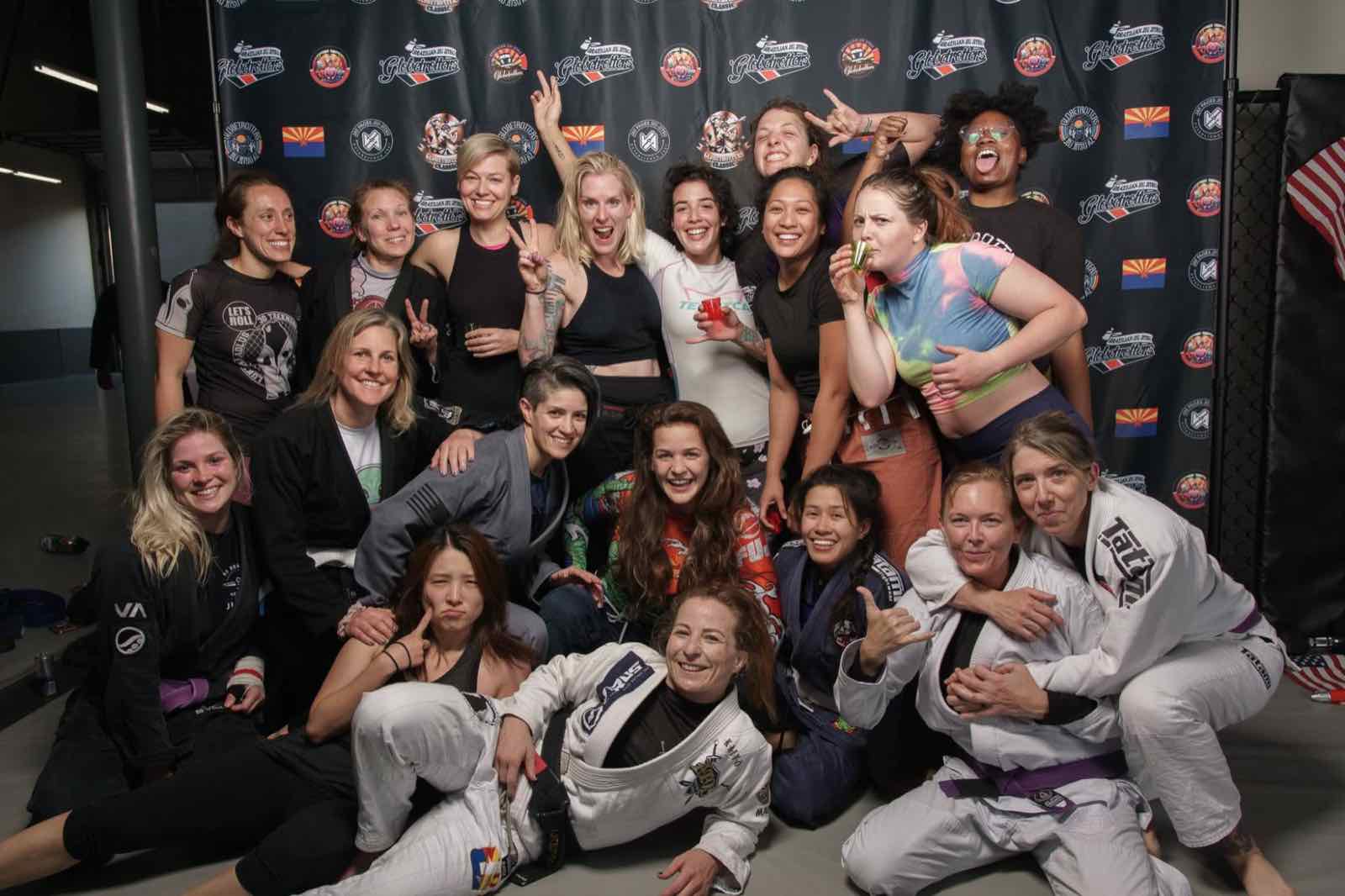
Who to roll with. At White Lotus you can roll with anyone. We're all on the same team, trying to get better, and nobody is trying to hurt each other. But don't feel forced to roll with anyone. If there's someone you just don't like training with, feel free to say no. No hard feelings: not all dance partners are made for each other, and that's okay!
Class styles. White Lotus offers several class styles, and we're always learning new ways to coach. There are many different tools to help you learn, and we want you to find the right one. See the class schedule for every class.
Rolling for a reason
People train jiu jitsu for lots of reasons, and some have nothing to do with getting better at jiu jitsu: camaraderie, exercise, weight loss, fun, self-defense, trying new things, competing, or wanting to fight. When you roll with someone, be curious about why they train. If they want to learn to fight and you're there for fun, a quick conversation before the roll is in order. Communication is key everywhere.
Sport, self-defense and MMA. There are different ways to play the game. At heart, they can all help keep you safe in a self-defense situation, but they're coached differently. Sport jiu jitsu focuses on getting better on the mats under BJJ rules. Self-defense focuses on what to do if an altercation happens out on the street. Then there's jiu jitsu for MMA. The core is the same, but as you progress they can take you down wildly different paths. Find the style that works best for you.
Must-knows of sport jiu jitsu
The ultimate goal is to get your opponent to "tap" out. The tap acknowledges that a part of the body has been isolated, and if the attacker kept going, physical damage would happen.
To apply submissions safely and efficiently, you need to pin your opponent (meaning stop their rotational movement) and isolate a limb or the neck. Almost always that means attaching with your legs, attaching with your arms, and finishing with force from your hips.
Strangles (chokes) "kink the hose" of the arteries that run up the neck. You need a connection with the neck, control of their rotation, and the ability to compress their jaw to their chest. In training, we always tap before it goes that far.
Joint locks. Anywhere there's a joint, it can be isolated and torqued a way it isn't supposed to go. Joint locks require rotational control.
Offensive and defensive principles
Offense. Move yourself so your opponent's weapons (in most cases, two arms and two legs) can't come into play. You can do that with movement (angles and distance management) or pins (weight distribution, or tying them into a pretzel). Try to get to their back, your chest connected to their back, or add weight through them to pin them to the ground.
Create angles so your weapons are useful. An angle is where your center of mass points in relation to where your opponent's points. Remember we're three-dimensional, so angles can have height too.
- Your hips should face your opponent and ideally be higher than theirs.
- Apply weight to inspire movement or to control it.
- Try to off-balance your opponent: push, pull, or rotate.
Defense. These principles help you stay safe and set up escapes and reversals:
- Elbows home, at your sides, as if you were carrying heavy groceries.
- Feet always on the ground or on your opponent, so you can move your hips.
- Always have space to move into. If you're not flat on the ground, you always have space behind you.
- Fight to get your hips higher than your opponent's.
- When in trouble, move your hips and get your elbows home. (Said twice for importance.)
Practicing these principles builds a solid foundation for your defense and makes it much harder for anyone to advance their position or submit you.
Finding White Lotus Jiu Jitsu
White Lotus is just outside downtown Milwaukee at 420 S 1st St, Milwaukee, WI 53204, at 1st and Florida in the Comedy Sports building in Walker's Point. Enter from the parking lot off Florida, look for the blue awning, go in that door and up the stairs. Visitors are always welcome.
Call or text (414) 253-6103 or email info@whitelotusbjj.com.